
COLLECT 2026: PALIMPSEST
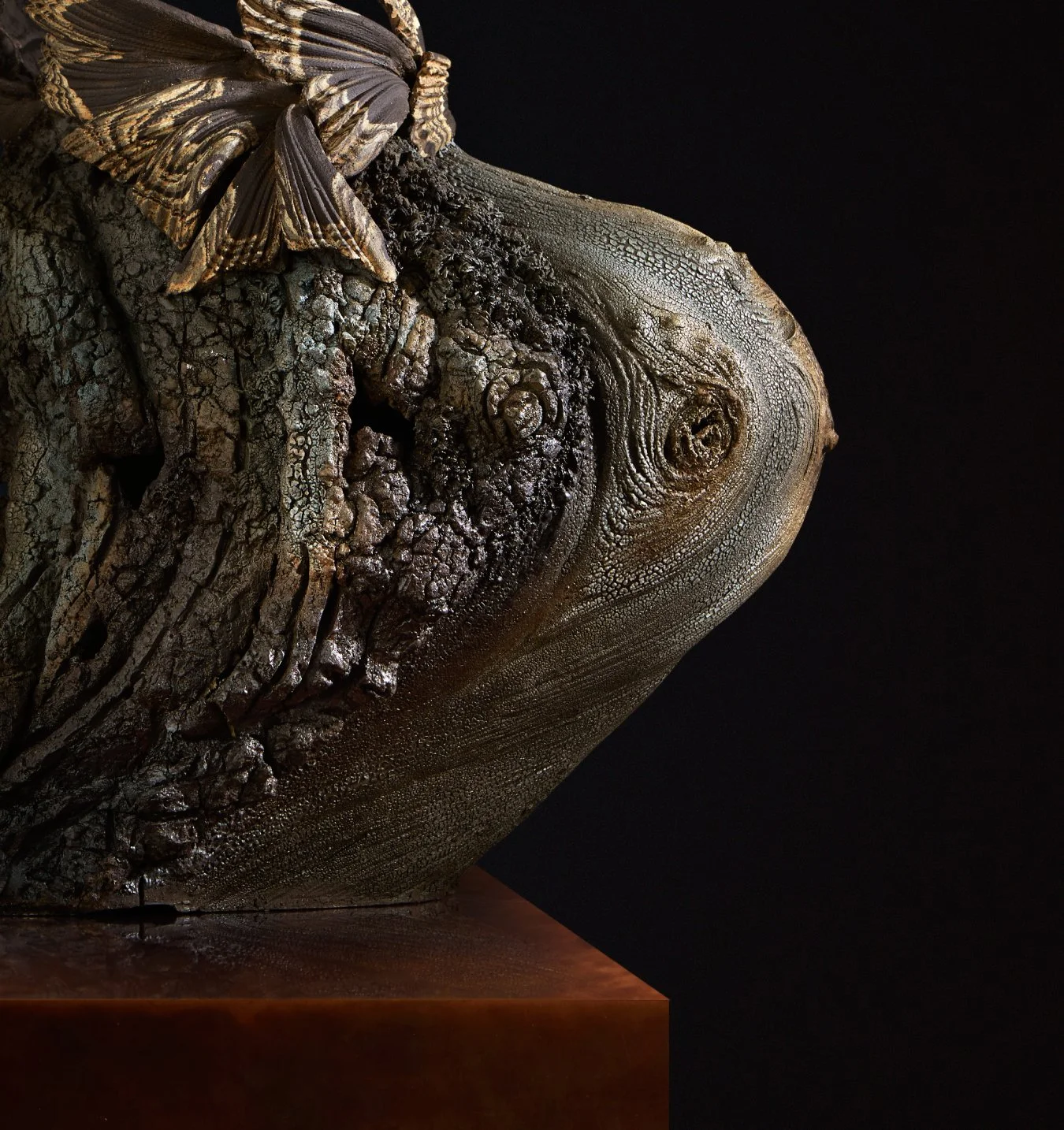
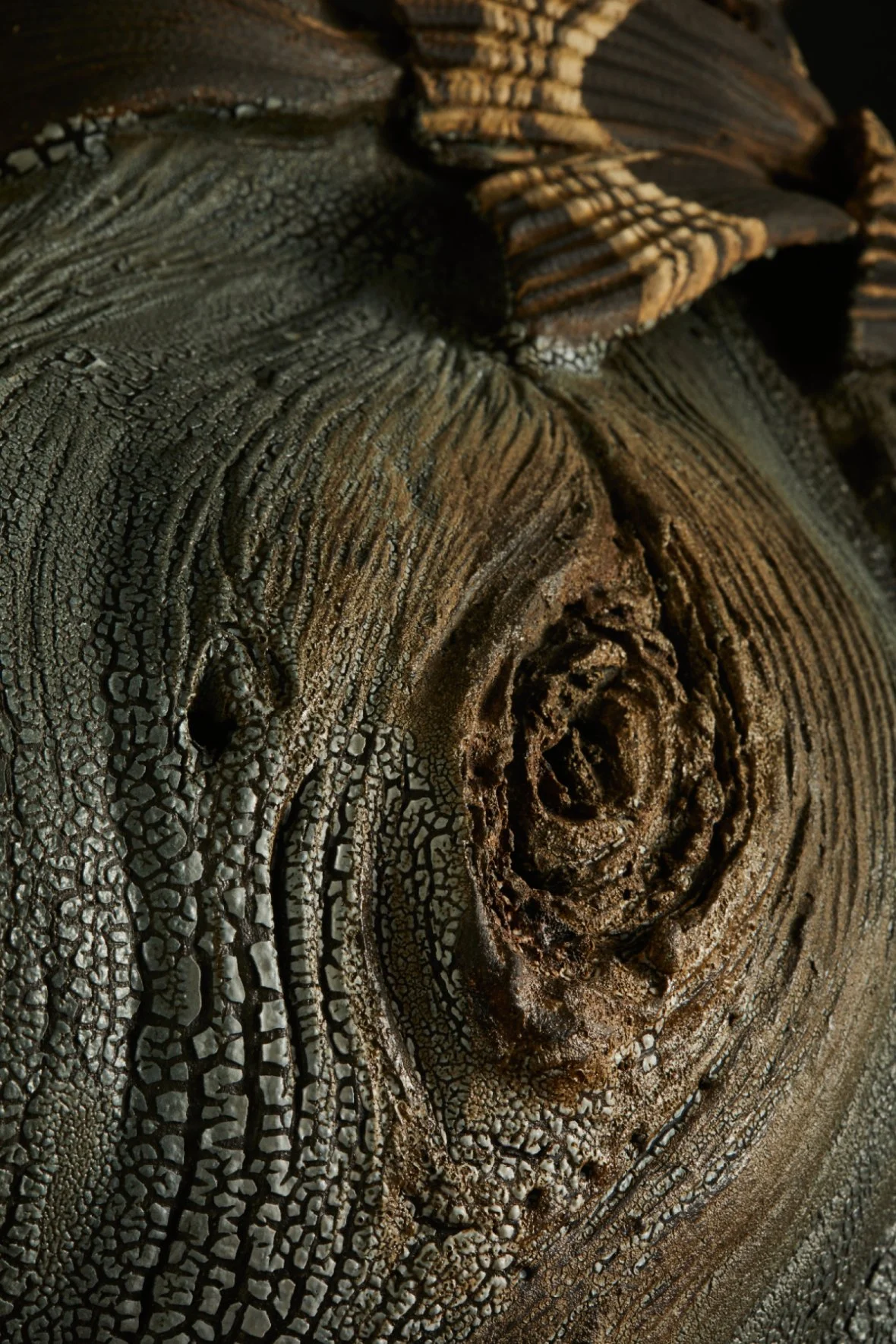
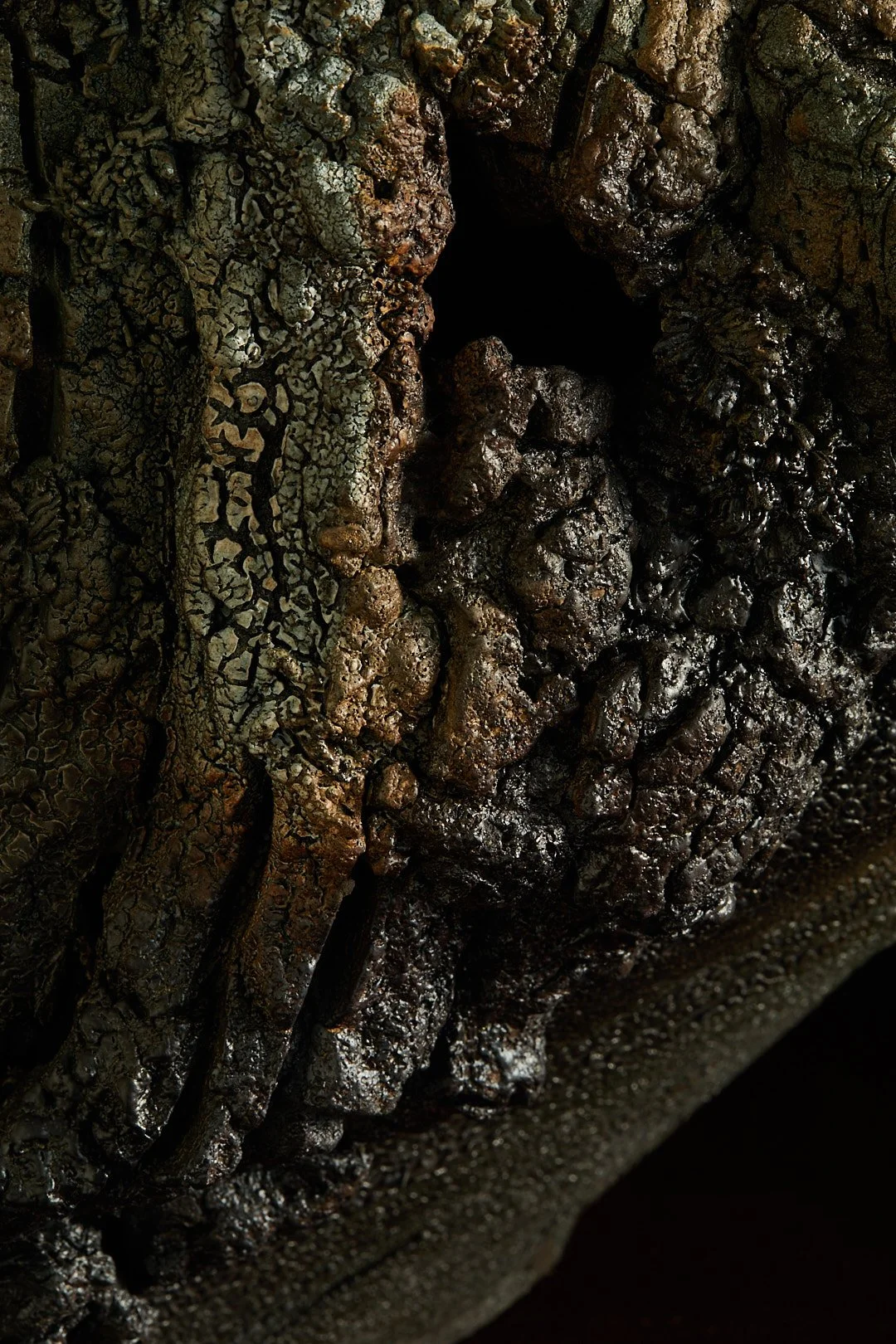
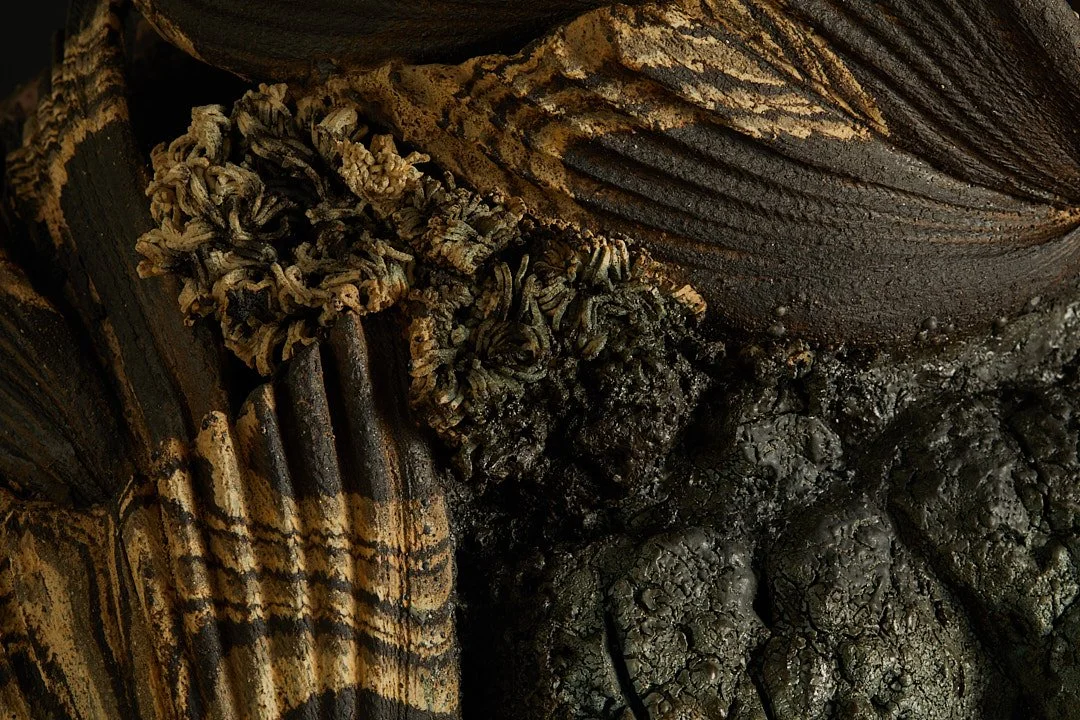
Palimpsest is an exploration of ancient trees as quiet witnesses to human culture. In woodland archaeology, a palimpsest refers to a forested landscape or feature that bears the traces of multiple, overlapping episodes of activity over time. Ancient trees retain signs of human use and care, and their form, scale or position reflect the society around them. Today, global trade and a changing climate are introducing new plant pathogens to the UK, adding another layer to this unfolding story. Palimpsest considers how this latest chapter may shape heritage trees, focusing on three tree species and their associated pathogens: English Oak/Oak Processionary Moth, Ash/Ash Dieback and Sweet Chestnut/Chestnut Blight.
English Oak & Oak Processionary Moth
English oak is one of the UK’s most iconic trees. The tree features prominently in folklore and literature, and it supports the highest number of insect herbivores of any British plant. England has more ancient oaks than the rest of Europe combined, which has been attributed to the persistence of medieval Royal deer parks. In Palimpsest, antlers and dog’s claws evoke the often brutal power structures that shaped these landscapes.
Oak Processionary Moth (OPM) was accidentally introduced to England from southern Europe. Large populations of the distinct, hairy caterpillars move in nose-to-tail processions on oak trees. They can strip whole trees bare, leaving them more vulnerable to other environmental stresses such as drought. OPM poses a serious health risk due to the hairs on the caterpillars, which cause skin rashes, eye and throat irritations and, occasionally, breathing difficulties. Due to this, OPM has the potential to fundamentally transform our relationship with the UK’s ancient oak population. If spotted, nests and caterpillars should not be touched, and the local authority/land owner should be notified. Plant material should not be moved from infested areas.
Ash & Ash Dieback
Ash has deep roots in UK folklore. It was believed to ward off evil, and ailments were treated through splitting an ash tree and passing the patient through the trunk. It was also thought to offer protection against snake bites. Ash is an early-succession species and not typically long-lived, but coppicing or pollarding can greatly extend its lifespan. Most ancient ash specimen are lapsed coppices or pollards, giving them strange, contorted forms. Palimpsest speaks of the unique ecology which is inextricably linked to these woodland management practices.
Ash Dieback is fungal disease that leads to dead branches, limb loss, leaf loss, bark lesions, and crown decline. The disease spreads via spores released from tiny white mushroom like structures, and it is often fatal. However, older trees have better tolerance and ancient specimen are a potential source of resilient material for the breeding of new resistant ash. Originating in Asia, the fungus is believed to have been introduced via imported ash saplings. First confirmed in England in 2012, the disease has since spread across the UK, with climate change worsening the impact. Steps to avoid spreading the disease further include not moving ash logs from one are to another and to clean boots and clothing after walking in infected woodlands.
Sweet Chestnut & Chestnut Blight
Sweet chestnut trees can grow to be very old, typically 500-700 years, with many reaching 1,000 years in favourable conditions. The species is native to south-eastern Europe and Asia Minor, and it is believed to have been introduced to Britain by the Romans. The tree is valuable for durable wood and long term coppicing, and it has become naturalised in the UK. In Palimpsest, symbols of Roman warfare such as eagle’s wings and horse hair plumes have been reinterpreted to signify the Sweet Chestnut as a more benevolent remnant of the Roman invasion.
Chestnut Blight is a fungal disease which enters through wounds and bark fissures, forming cankers that girdle branches and trunks. This blocks the transport of water and nutrients, leading to wilting leaves, dieback, and ultimately, tree death. Bright orange fruiting bodies can appear on the cankered bark. Originating in Asia, the disease has almost wiped out North America’s Sweet Chestnut population. In the UK, the pathogen was first confirmed on imported plant stock in 2011. Its geographical spread has currently been limited through strict control measures. Spread of the fungus can be prevented by cleaning boots, tools and vehicles after visiting woodlands, by not transporting chestnut wood, bark or nursery stock between areas, and by not planting non-certified chestnut trees.
To find out more about the above pathogens and to report signs of dangerous tree pests and diseases, please use the Tree Alert system.